Course Description

Synopsis:

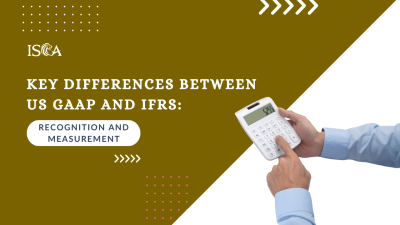
US GAAP and IFRS share a similar framework and have been significantly converged over the past two decades. Still, major differences remain in relation to recognition and measurement. We will look at key conceptual differences, differences in terminology, and specific examples of recognition and measurement differences that are commonly faced by reporting entities and auditors. 

In this module, the following topics will be covered:

  1. Conceptual differences – Impairment, Revaluation and Industry Focus
  2. Terminology – "Probable" concept and Contingents (Liabilities vs Losses)
  3. Specific examples
    • Inventory Methods and Write-Down Reversals
    • Fixed Assets – Revaluation and Components Approach
    • Lease Accounting – ROU Asset and Cash Flows
    • Financial Instruments – Credit Losses and SPPI Model
  4. Recent standards creating differences

Stay tuned for the module on US GAAP and IFRS: Presentation and Disclosure, also led by Thomas Egan. 


Intended For:

  • Audit Professionals / PAIP
  • Finance Professionals  / PAIB
  • Public Sector Finance
  • C-suite & Directors 


Competency Mapping: 

  • CPE Category 1 = 1.0 CPE Hour 
Instructor Image

Thomas Egan

Thomas is a member of ISCA, as well as ACCA, CPA Australia and is a licensed US CPA.  He had served on a number of committees related to accounting standards, financial reporting, and XBRL.  He has extensive experience related to accounting for financial instruments gained through the past 18 years in technical accounting roles with a Big 4 firm and an international bank and is currently the accounting advisor to the airline industry for implementation of IFRS 9, Financial Instruments, IFRS 15, Revenue and IFRS 16, Leases. Thomas holds a Masters degree in accounting from the University of Wisconsin - Madison and a Postgraduate Diploma in Strategic Finance from the University of Oxford.

Course Rating

Speaker's Rating

1 CPE Hour

Lesson(s)

3

Related courses